
Protection Against Hidden Water Damage
Bathroom Waterproofing & Sealing in McKinney for shower enclosures, tile joints, and perimeter barriers against moisture infiltration
Collin County homes experience year-round moisture exposure in bathrooms, and inadequate waterproofing leads to hidden water damage behind walls and under flooring. Bath Masters of Collin County provides waterproofing and sealing for bathrooms in McKinney, applying membrane materials to substrate surfaces before tile installation and sealing all penetrations where water can infiltrate. The work protects framing, drywall, and subfloor from rot, mold growth, and structural deterioration that isn't visible until extensive damage has occurred.
Waterproofing involves substrate preparation with barrier materials applied to all shower walls, pan areas, and curb surfaces before any tile is installed. Sealing happens at every junction where water can penetrate—tile joints, fixture penetrations, and the perimeter where walls meet floors or tubs. Without this protection, moisture migrates through grout lines and accumulates inside wall cavities, creating conditions for mold growth and wood rot that compromise structural integrity.
Schedule a remodel evaluation to identify waterproofing requirements based on your current bathroom configuration and moisture exposure patterns.
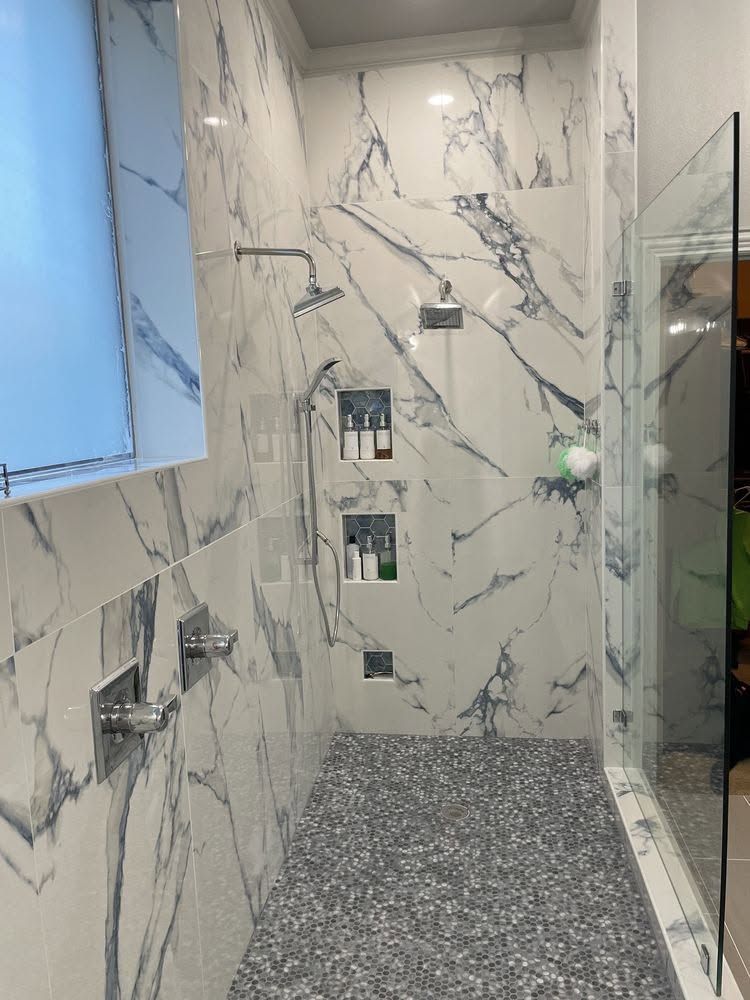
Why Waterproofing and Sealing Matters Long-Term
The waterproofing membrane creates a continuous barrier across all surfaces that contact water, preventing moisture from reaching materials behind the tile. Application happens during the substrate prep phase, after rough plumbing is complete but before tile installation begins. Penetrations for valves, drains, and fixture mounts are sealed with gaskets and membrane collars that maintain the barrier even where the surface is interrupted.
Once waterproofing is complete, moisture stays on the tile surface where it evaporates or drains away rather than penetrating into wall cavities. Grout lines are sealed to resist water absorption, reducing mildew growth and discoloration that would otherwise require frequent cleaning. The substrate behind the tile remains dry, preventing the musty odor, soft spots in drywall, and structural damage that indicate hidden water infiltration. Bath Masters of Collin County includes waterproofing and sealing as integral components of bathroom remodels rather than treating them as optional upgrades.
The work is integrated into the remodel completion phase, coordinated with tile installation and fixture trim-out to ensure every potential water entry point is addressed. Higher build quality standards include waterproofing specifications that prevent problems competitors often dismiss as unnecessary until leaks become visible and require costly repairs.
Answers to Frequent Waterproofing Questions
Bathroom waterproofing in McKinney addresses moisture exposure that leads to hidden structural damage and mold growth over time.
What does waterproofing substrate preparation involve?
Substrate prep includes applying membrane materials to all surfaces that will contact water, including shower walls, pan areas, curbs, and tub surrounds. The membrane creates a continuous barrier that stops moisture from reaching framing and drywall behind the tile.
How does sealing differ from waterproofing?
Waterproofing protects the substrate before tile installation, while sealing addresses grout joints, fixture penetrations, and perimeter gaps after tile is installed. Both are necessary—waterproofing prevents water from reaching structural materials, and sealing reduces the amount of water that penetrates tile surfaces in the first place.
Why do McKinney bathrooms require sealing at perimeter junctions?
Collin County homes experience seasonal temperature and humidity fluctuations that cause expansion and contraction at junctions where different materials meet. Sealing these gaps prevents water from migrating into wall cavities or under flooring, where it causes rot and mold growth that isn't visible until significant damage has occurred.
What are the consequences of inadequate waterproofing?
Without proper waterproofing, moisture penetrates through grout lines and accumulates inside walls, leading to mold growth, wood rot, and drywall deterioration. The damage often isn't visible until soft spots appear in walls, musty odors develop, or tile begins detaching from compromised substrate.
When should waterproofing be applied during a remodel?
Waterproofing happens after plumbing rough-in is complete and inspected but before any tile installation begins. This sequencing allows the membrane to be applied to clean, dry substrate and ensures penetrations for drains and valves are sealed before they're concealed by tile.
Bath Masters of Collin County integrates waterproofing and sealing into every bathroom remodel, addressing moisture protection as a core component rather than an optional add-on. Arrange a consultation to review waterproofing requirements for your specific bathroom layout and to discuss how membrane materials and sealing methods protect against long-term water damage.