
Vanities Sized for Plumbing Realities
Custom Cabinets & Vanities in McKinney for bathrooms where standard vanity dimensions conflict with existing plumbing locations
Standard vanities in Collin County bathroom remodels often require plumbing modifications to align drain and supply line locations with cabinet openings—drain stacks positioned off-center force installers to drill through drawer boxes or cabinet backs, and supply lines that don't match valve spacing require extension adapters that leak over time. Custom vanities eliminate those conflicts by sizing cabinet dimensions around existing plumbing or coordinating plumbing rough-in with cabinet layout during the design phase. Bath Masters of Collin County designs and builds custom vanities and bathroom cabinetry in McKinney as part of full remodel projects, with dimensions determined during the design consultation phase to ensure that plumbing lines, electrical outlets, and countertop overhangs work together without compromising cabinet function or creating installation obstacles.
Vanity design begins with measuring existing plumbing locations and determining whether drain and supply lines can remain in place or need repositioning to accommodate cabinet layout. Cabinet dimensions are selected to provide functional storage without interfering with door swings or adjacent fixtures. Countertop material is chosen based on durability and finish preferences, with quartz and stone options requiring edge profiles and cutout locations confirmed before fabrication begins. Plumbing and electrical rough-in is coordinated with cabinet installation so that supply lines terminate inside cabinet openings and electrical outlets align with countertop height.
Schedule a design consultation to review plumbing layout and vanity dimensions before material and countertop selections are finalized..
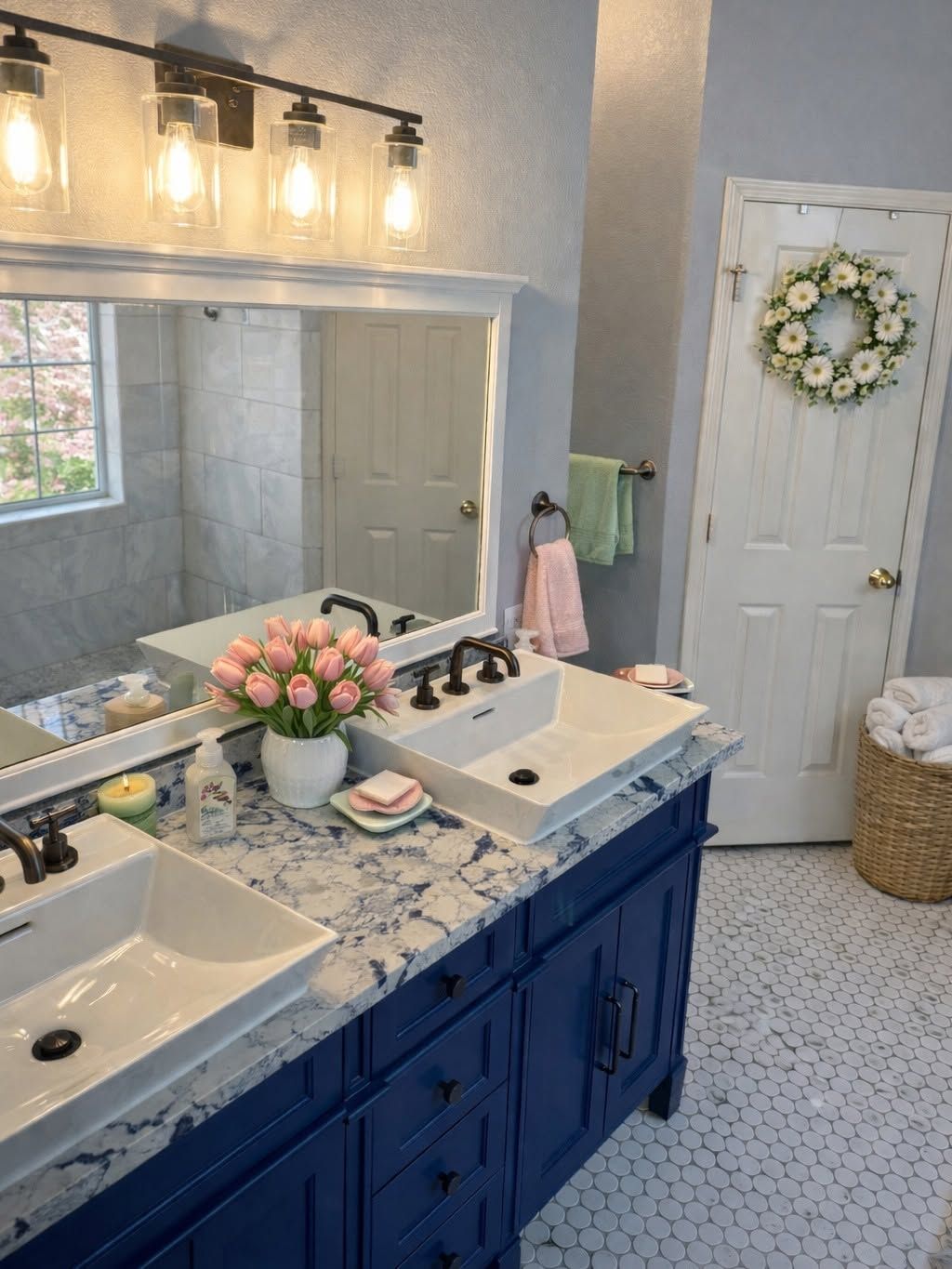
The Difference Between Custom and Standard Vanities
Custom vanities in McKinney are built or specified based on exact plumbing locations, countertop dimensions, and storage requirements identified during the design consultation, rather than selected from standard widths that require on-site modifications to fit available space. Cabinet interiors are configured with drawer boxes and shelves sized to accommodate plumbing penetrations without wasting usable storage, and countertop overhangs are planned to provide clearance for drawers and doors without creating awkward gaps at wall junctions. High-end semi-custom vanities offer similar sizing flexibility with faster lead times than fully custom builds, though finish and hardware options may be more limited.
Once the vanity is installed, you'll notice that drawers open fully without binding against plumbing lines, cabinet doors close flush without gaps caused by out-of-square walls, and countertop edges align with cabinet faces without requiring filler strips or trim pieces to hide mismatches. Electrical outlets are positioned at backsplash height rather than protruding through countertop surfaces, and supply line shutoff valves remain accessible inside cabinet openings without requiring drawer removal. The vanity sits level without rocking because cabinet dimensions were confirmed before installation and shims were used to compensate for floor irregularities common in older homes.
Custom vanity work includes design consultation to establish dimensions and finishes, cabinet construction or sourcing, countertop fabrication and cutout placement, plumbing rough-in coordination, electrical outlet positioning, and final installation with leveling and securing to wall framing. The lifetime warranty Bath Masters of Collin County provides on full remodels extends to cabinetry as part of the overall project scope..
What Property Owners Usually Ask
Vanity decisions affect bathroom storage and functionality, and understanding the design process helps you balance finish preferences with practical constraints.
What happens during the vanity design consultation?
You review cabinet dimensions based on available wall space and plumbing locations, select finishes and hardware, and confirm countertop materials including edge profiles and backsplash height. Bath Masters of Collin County evaluates whether existing plumbing can remain in place or requires repositioning to align with cabinet layout.
How do plumbing locations in McKinney homes affect vanity sizing?
Older homes often have drain stacks and supply lines positioned to suit vanities that were standard decades ago, and modern vanities with larger widths or different drawer configurations may require plumbing relocation or custom cabinet sizing to avoid conflicts between plumbing penetrations and drawer boxes.
Why do some vanity installations require filler strips?
Standard vanities come in fixed widths that rarely match available wall space exactly, and filler strips cover gaps between cabinet ends and adjacent walls. Custom vanities are sized to fit the space without fillers, creating cleaner lines and eliminating trim pieces that collect dust and moisture.
What countertop materials work best for bathroom vanities?
Quartz resists staining and requires no sealing, making it practical for bathrooms where toothpaste and cosmetics contact surfaces daily. Natural stone offers unique appearance but requires periodic sealing to prevent water absorption, while solid surface materials can be repaired if scratched but may show wear more quickly than quartz.
When should vanity plumbing be updated during remodels?
Supply lines and drain assemblies should be replaced if they're galvanized steel or show corrosion, if shutoff valves leak or don't close completely, or if existing rough-in doesn't align with new vanity cabinet openings. Updating plumbing during vanity installation prevents callbacks for leaks after cabinets and countertops are in place.
Bath Masters of Collin County integrates custom vanity work into full bathroom remodels with plumbing and electrical coordination managed through the design phase. Request a vanity consultation to establish cabinet dimensions and countertop requirements before finish selections and material orders are placed.