
Tubs Installed With Updated Surrounds
Bathtub Remodels & Replacement in McKinney for older homes where original tubs and surrounds no longer match current plumbing standards
Original bathtubs in Collin County homes built before 2000 often remain functional while the surrounding tile and plumbing fixtures deteriorate—grout lines crack and allow water intrusion, faucet valves drip because internal seals have hardened, and tub surfaces show staining that resists cleaning because the porcelain finish has worn through to the underlying metal or fiberglass. Replacing the tub alone doesn't address surround waterproofing or outdated valve assemblies. Bath Masters of Collin County handles bathtub remodels and replacement in McKinney by updating tubs, rough-in plumbing, tile surrounds, and fixtures as integrated systems rather than isolated components, preventing mismatched finishes and ensuring that waterproofing extends from the tub flange to the ceiling line.
Replacement begins with tub removal and inspection of rough-in plumbing to determine whether drain assemblies and supply lines meet current code and fixture requirements. Tub installation includes leveling and securing the unit to framing, sealing the flange to prevent water from migrating behind surround materials, and connecting drain and overflow assemblies with access panels for future maintenance. Surround work involves waterproofing substrate installation, tile or panel application, fixture valve installation, and final sealing of all penetrations.
Schedule a tub evaluation to review existing plumbing and surround conditions before fixture and material selections are finalized.
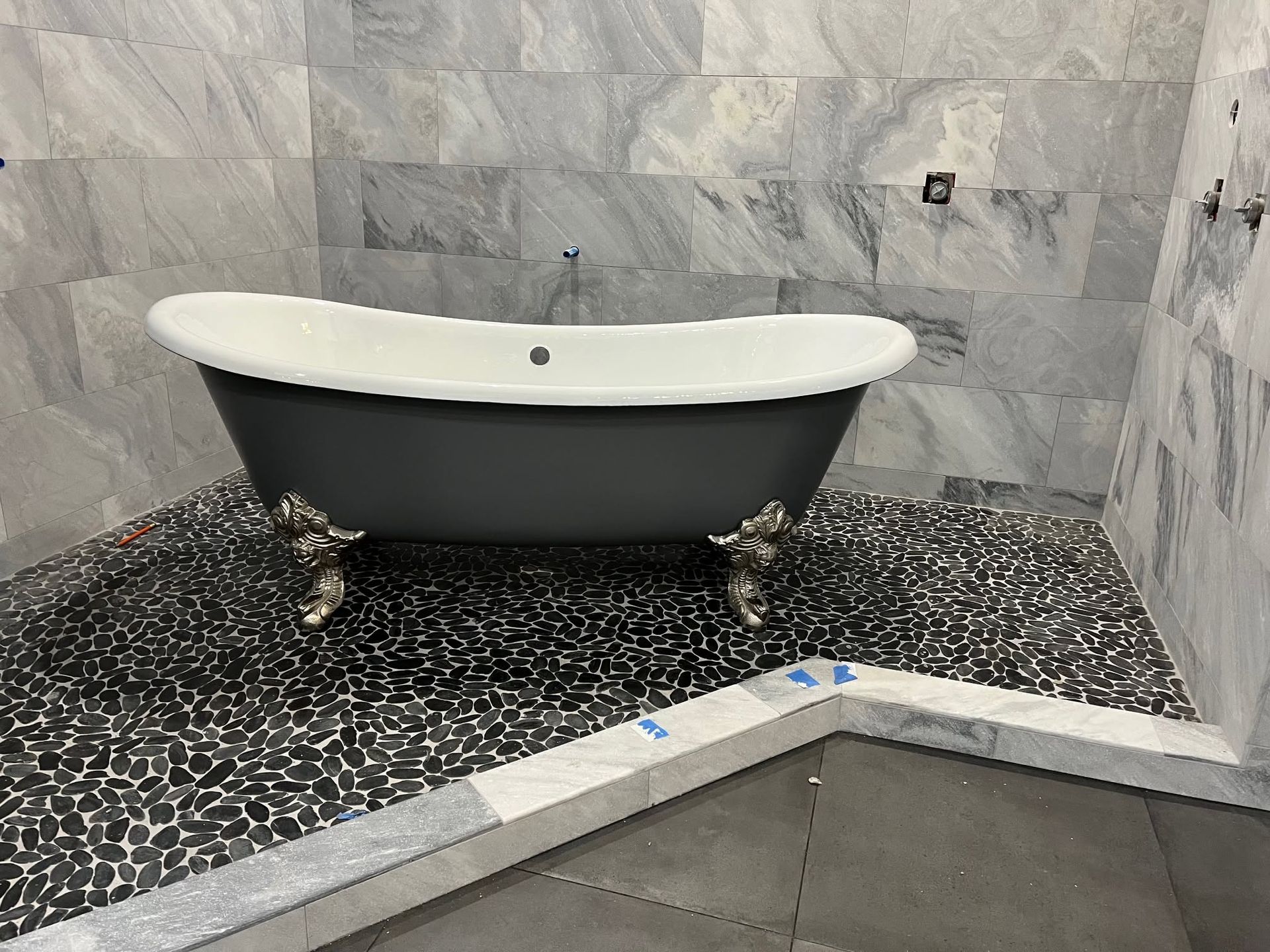
What You Notice Once Tub Replacement Is Finished
Tub replacement projects in McKinney involve demolishing existing surrounds to access framing and plumbing, removing the old tub without damaging subfloor or adjacent walls, installing the new tub with proper support and leveling, and rebuilding surround walls with waterproofing membranes that prevent moisture from reaching framing. Faucet valves are replaced rather than reused because internal components degrade over time and mixing cartridges fail to regulate temperature accurately once seals wear out. Tile or panel surrounds are installed with expansion joints at tub flange interfaces to accommodate movement without cracking grout or sealant.
After replacement, the tub sits level without rocking or flexing when weight is applied, and water drains completely without pooling at one end. Faucet valves deliver consistent temperature without requiring handle adjustments mid-shower, and surround walls shed water without allowing moisture to seep into grout joints or panel seams. The tub flange remains sealed against the surround material, preventing water from migrating behind walls and causing mold growth or framing rot. Tile grout lines remain intact because the substrate was waterproofed and the tub was properly supported before surround work began.
The remodel includes tub removal and disposal, rough-in plumbing updates, new tub installation with leveling and flange sealing, surround substrate waterproofing, tile or panel installation, fixture valve replacement, and final sealing. Custom surrounds qualify for the lifetime shower warranty that Bath Masters of Collin County provides, covering leaks and structural failures for the duration of homeownership and transferring to future buyers..
Answers to Frequent Service Questions
Bathtub replacement projects in older homes often require plumbing and framing updates that aren't visible until demolition reveals conditions behind existing surrounds.
What happens to the surround when the tub is replaced?
Existing tile or panel surrounds are demolished to access the tub flange and rough-in plumbing, and new surrounds are built with updated waterproofing membranes and tile or panel finishes selected during the design consultation. Partial surround preservation isn't possible because tub removal damages adjacent materials.
How do I know whether rough-in plumbing needs updating?
Drain assemblies that lack overflow openings or supply lines soldered directly to valve bodies indicate outdated plumbing that should be replaced during tub installation to prevent leaks and ensure compatibility with modern fixtures. Galvanized steel supply lines corrode internally and restrict water flow even when exterior surfaces appear intact.
Why does tub leveling matter for surround durability?
Tubs that aren't level cause water to pool at one end, increasing hydrostatic pressure against grout joints and sealant at the flange interface. Over time, standing water penetrates surrounds and damages framing, requiring more extensive repairs than if the tub had been leveled correctly during initial installation.
What types of tubs work best in McKinney remodels?
Cast iron tubs provide durability and heat retention but require reinforced subfloor framing to support weight, while acrylic and fiberglass tubs install more easily and cost less but may flex under weight if not properly supported. Material selection depends on existing framing capacity and finish preferences. Acrylic tubs have to be raised to allow for airflow and to slow down bacteria growth.
When should I replace the tub instead of refinishing it?
Refinishing works when porcelain or fiberglass surfaces show staining or minor scratches but the tub structure remains sound and dimensions match current preferences. Replacement is necessary when tubs have cracked, when updated plumbing requires different drain locations, or when tub dimensions no longer suit bathroom layout.
Bath Masters of Collin County integrates tub replacement into full bathroom remodels with coordinated plumbing, electrical, and surround work. Request a plumbing inspection to determine whether your existing tub and rough-in systems can support updated fixtures or require full replacement before material selection begins.